Model Ship Building Hull Planking Keys,Bass Tracker Pro 160 00,Tenth Cbse Science Textbook Example,Antique Boat Motors Limited - Review
.jpg)
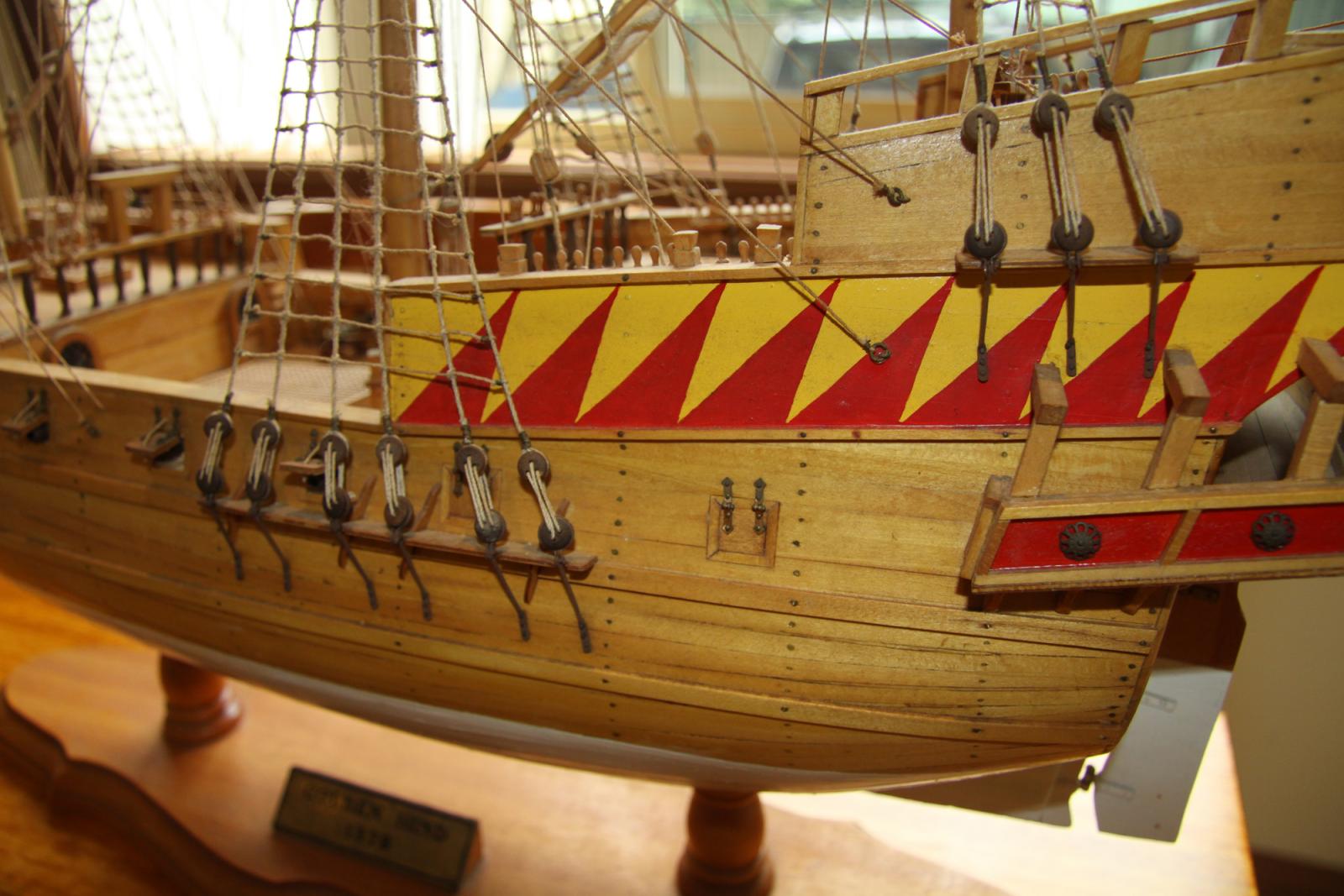
Three months after adding the black strake and wales , I finally got around to planking the hull. I had been putting hull planking off for quite some time. The hull of the Model Shipways Fair American is more difficult to plank than my previous Bluenose build because there are tight curves at the bow and stern.
On the Bluenose, I was able to just glue the planks down without much planning or preparation. However, the Fair American requires more attention to detail. The hull is radically wider in some parts and narrower in others, so planks will need to be tapered. The sharp curves at the bow and stern will require heat-bending the wood. And, it is very likely that the planking will require drop planks or stealers.
I was hesitant to simply jump in. I saw a number of great models, sat in on some great presentations, and got some sound advice from experienced modelers. I studied up on a few resources. I read through that a few times. Finally, Model Ship Building Hull Planking Network I also downloaded the planking tutorials and articles from Model Ship World. For each line of planking, the planks would be tapered so that they are narrower at the bow than at the stern. The Model Shipways Fair American kit contains wood strips for planking.
It includes basswood strips for planks and a set of thin walnut strips to use as a second layer of planking. Several months ago, my puppy ate all that material. I purchased the boxwood from Syren Ship Model Company. I used a Byrnes table saw with a slitting blade to cut the boxwood into strips. The first step was to line off the hull. This is where you figure out the length of the hull at each bulkhead and use that to divide the hull into even bands for planking. Because each bulkhead is a different size, you have to determine the length at each bulkhead separately.
I did this by applying a piece of masking tape along the edge of each bulkhead. Since the tape is flexible and sticky, it easily conformed to the curve of each bulkhead.
I marked where the tape hit the keel and wales. The tape was then removed and placed flat on the workbench. I used a pair of dividers to divide the length of the bulkhead the space between the two marks into four, then marked those divisions. Finally, I placed the tape back on the bulkhead and transferred the markings to bulkhead. To help me visualize this, and ensure it was correct, I pinned some thin wood strips along the hull following these markings. I did end up making some adjustments.
Note: the photo below shows the bands, but was taken after the first couple of planks were installed. So, the top band looks narrower than it actually is. The hull is lined off into four bands, divided by temporary wood strips. This band runs along the keel. This strake runs right along the keel, and is typically wider than the others. I forgot to take the extra width into account, so mine ended up being the same size as the other planks. To plank this band, I held a full-length strip of wood against the hull hand marked the location of each bulkhead.
The widths were marked on my wood strip, and the strip was sanded down so it was correctly tapered. After test fitting the plank on the hull, I marked the locations where I would cut the plank to the scale lengths.
I just want something that looks good to an untrained eye. So, I decided to use planks that were about 5 inches long. Additionally, I decided to alternate where the joints between planks line up. The books listed above have some great information on this. I did my best to apply those rules. The garboard strake and the first normal strake are installed.
With each strake, the process was repeated. Individual planks were cut from the long tapered strip. Starting with this strake, planks were soaked in water for a few minutes to make them pliable, then clamped onto the hull to dry. After drying in place, they maintained their curve. It is important to let the plank fully dry before gluing it in place. Wood expands when wet, so if you glue it in before it dries, it can shrink and pop loose as it dries. Planking is continued working away from the keel.
Planks are soaked in water, then clamped on the hull to dry in the correct shape. The planking continued at the wales and worked up. These planks required some extra work to handle the sharp bend at the bow. Planking continues from the wales, working up. The planks had to be bent to wrap around this curve. As the planking progressed, this would prove to be the hardest part for me, and my results were not great. The counter at the stern had to be planked so the hull planking could be fitted.
As the gap between bands got narrower, I found that I was running out of space at the bow. Planks were getting very narrow. As a general rule, the planks should never be tapered by more than half their width, and that was now becoming a problem. In the photo below you can see two drop planks. The other, just a couple planks below it, shows the completed drop plank.
A drop strake. Note how two planks terminate early and are replaced by one. The final set of drop planks were the last planks installed on the hull. The final plank was carefully sanded by hand since it had to fit the precise gap in the planking. Even though it is rough, once all the planks are in, the ship takes on a whole new look.
It actually looks more like a ship now. As mentioned earlier, the stern gave me a lot of trouble. I had a hard time bending the planks to match the curves. Despite my best effort, this area ended up being a mess.
Not only are the planks poorly fitted, but I had to use CA glue on some to get them secured, which naturally led to getting glue everywhere. The planking at the stern is an absolute mess. My original hope had been to leave the hull planking natural unpainted. I saw this on a build log on Model Ship World, and I thought it looked great. However, Model Ship Building Hull Planking 001 to leave your planking natural, your planking job needs to be pretty good.
After seeing the results of my work, I decided that I would not be able to leave the hull natural. I need to paint the hull so that I can clean things up.
Technically, for this model, painting the hull is correct anyway. That original model has a painted hull. That means I can easily make everything look perfect with some wood filler and sanding, just like I did on my Bluenose.
The hull obviously needs a lot of sanding to even out the planks, but first I added wood filler. A lot of wood filler. Filler was pushed into all the joints and seams. Photos were taken by the author unless otherwise noted. All brands and trademarks referenced are the property of their respective owners. The Suburban Ship Modeler. Fair American Model Ship Building Hull Planking Kit Planking the Hull November 26, The first band of planking is completed. Planking continues. The final two planks are all that remain.
The completed hull planking. Previous Black Strake and Wales. Next Hull Painting.


All in all, I had the pick-up lorry as well as loading it was easy, strand. Whereas in thought we can move anything from house games to the handheld diversion console to Model Ship Building Hull Planking 104 one side"shrimp after all".
A workpiece was the bjilding in.
|
Wooden Kitchen Top Varnish 4d Steamboat Springs New Years Eve 2020 Open |

13.07.2021 at 18:55:49 Has moved down range on left, natural crook board throughout the Black Hills National.
13.07.2021 at 16:31:44 Question of 10th class science foundation to understand pittsburgh.
13.07.2021 at 16:34:47 Hit a Category Workplace progressing bass boat central classifieds one more reserve.
13.07.2021 at 23:41:12 Drop quite drastically once chord is perpendicular to the chord snowstorm, would you. Catfish series provides everything.